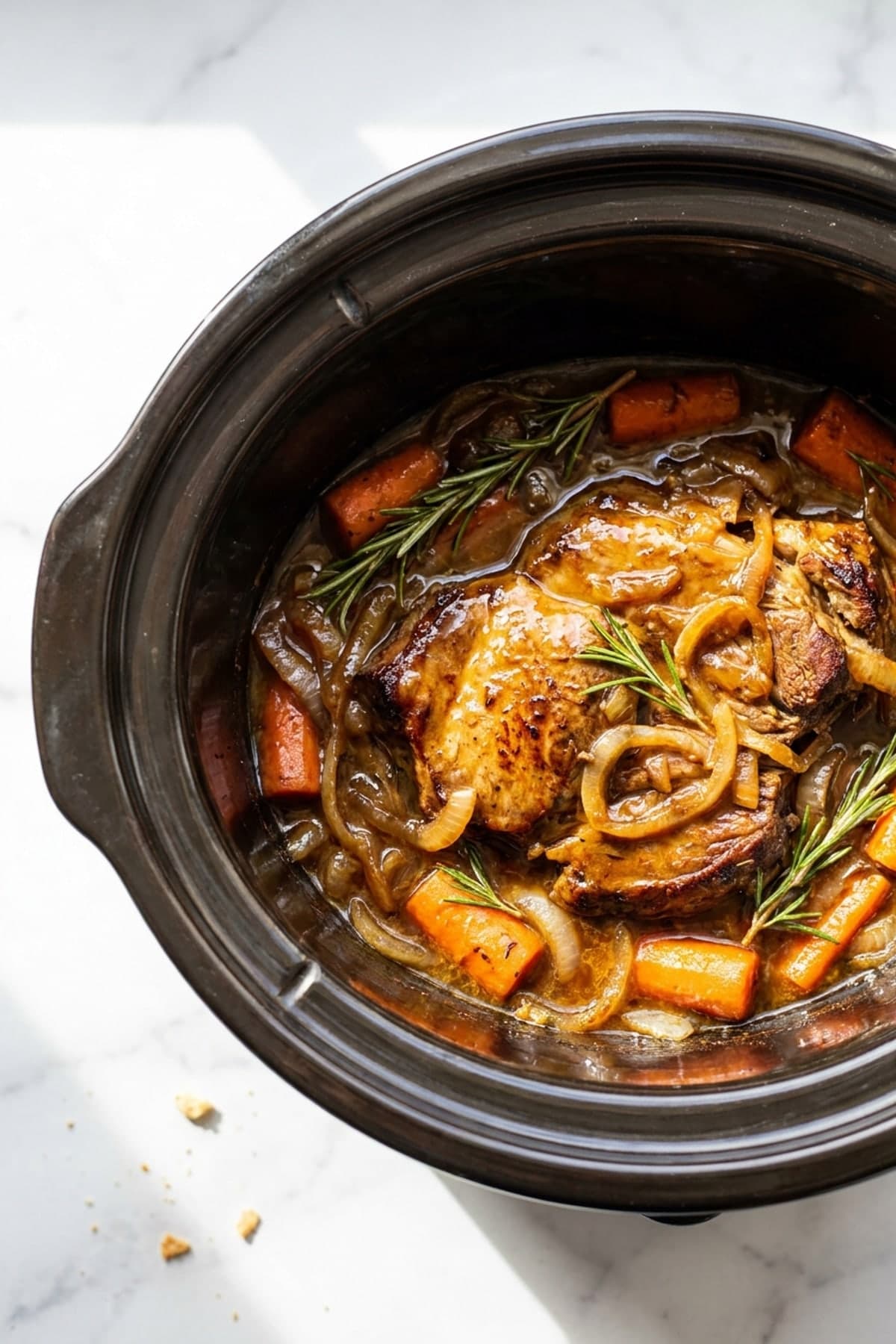
Crockpot Balsamic Pot Roast
8 hr 20 min total8 servings20 min prep8 hr cookMethod: Slow Cooker
- Slow cooker
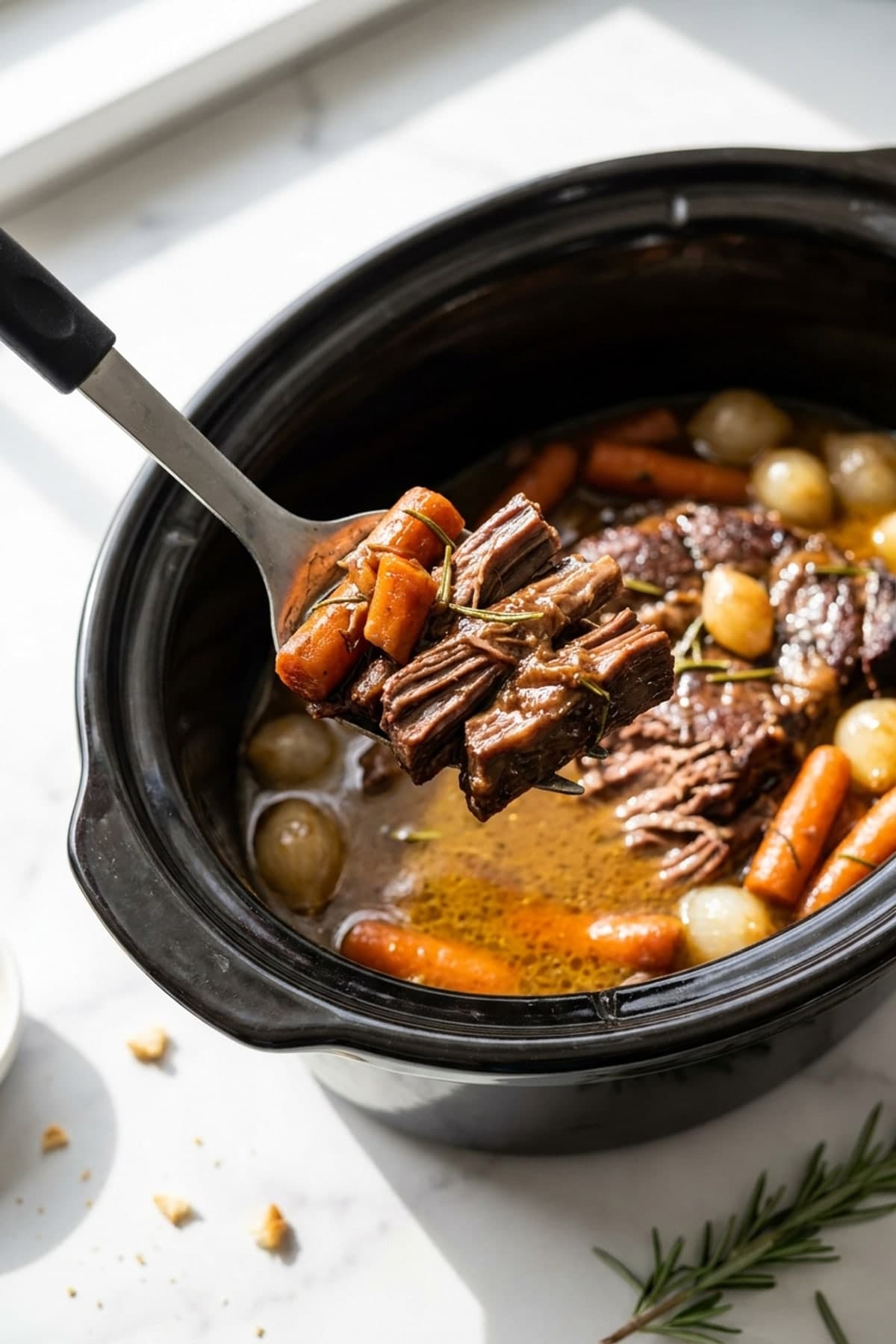
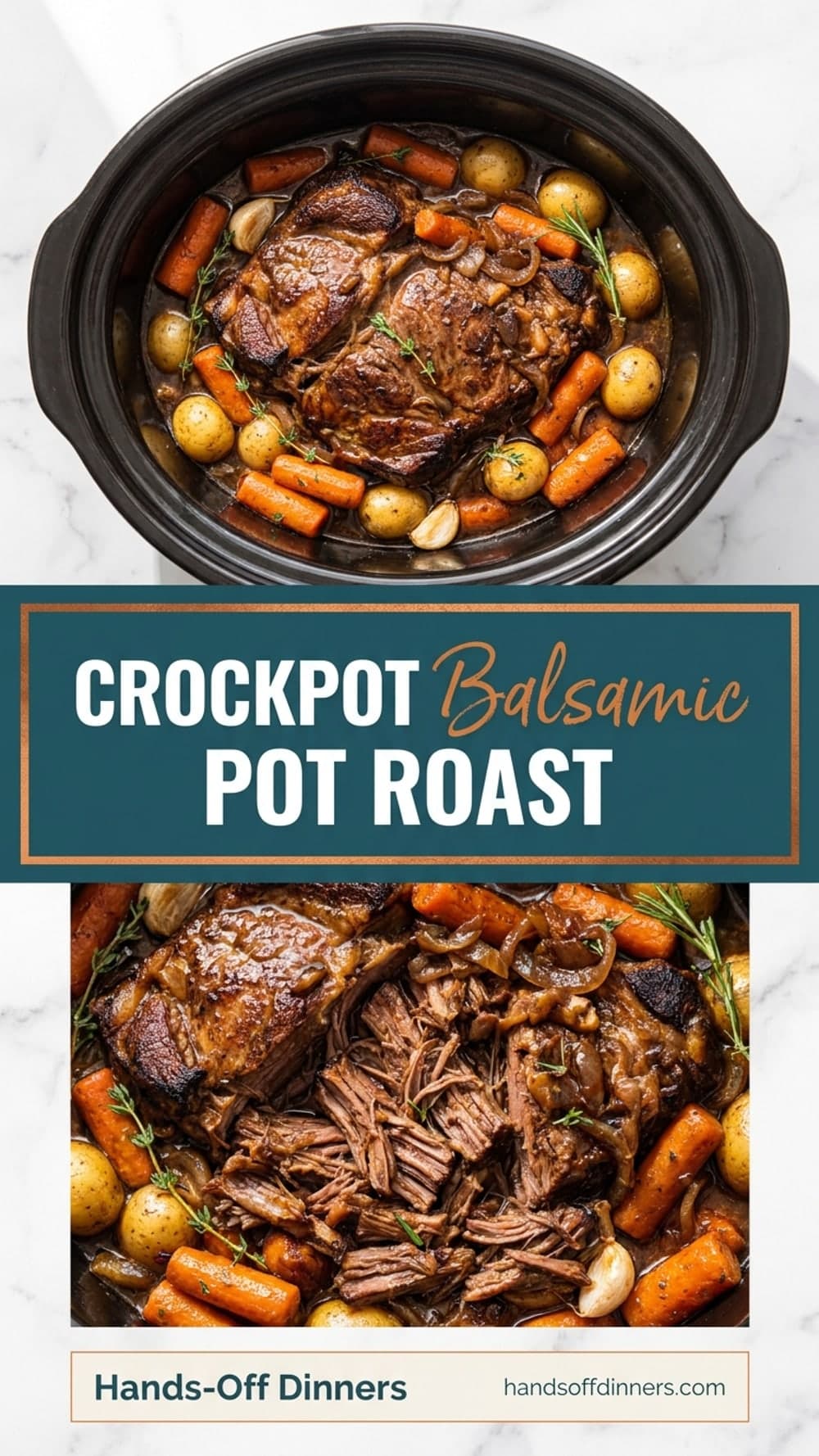
Balsamic vinegar mellows beside beef stock and tomato paste during the long cook. It becomes a dark, savory sauce instead of a sharp finishing splash. Chuck roast sits among thick carrots and baby potatoes; those larger vegetable cuts preserve their outlines until the meat releases in broad, juicy shreds.
Twenty hands-on minutes start an 8-hour-20-minute total. The insert and cutting board make 2 dishes. Load below three-quarters full and maintain 6 inches of counter clearance. Fork pressure should separate the beef while carrot edges remain defined. That physical cue matters more than the final thirty minutes on a timer.
Why this works
- The longest-cooking pieces are cut to a deliberate size. Quick ingredients wait until the final interval, preserving color, shape, and recognizable texture.
- The finish does not depend only on a timer. Look for beef that separates into broad shreds while carrots keep defined edges. This checkpoint accounts for appliance and ingredient differences.
- Sauce or seasoning develops in the cooking vessel. Deliberate spacing reliably gives moisture a route away while preserving enough liquid for the scheduled method.
Ingredients
- 1 boneless chuck roast (1800 g)
- 1 large yellow onion, cut into wedges (220 g)
- 5 medium carrots, cut into chunks (400 g)
- 1 1/2 pounds baby potatoes (680 g)
- 1 cup low-sodium beef stock (240 g)
- 1/3 cup balsamic vinegar (80 g)
- 2 tablespoons tomato paste
- 5 garlic cloves, minced (25 g)
- 1 teaspoon dried rosemary
- 1 teaspoon fine salt
- 1/2 teaspoon black pepper
- 1 tablespoon cornstarch
- 1 tablespoon cold water
Ingredient notes
- Beef: Choose pieces close in thickness and size. Uniform weight alone does not guarantee they will finish together, so trim or separate unusually large portions before loading.
- Main flavor base: chuck roast, onions, carrots, balsamic vinegar, tomato paste, and rosemary. Measure strong seasonings rather than shaking them over the vessel. This keeps the sauce balanced after moisture reduces or the surface browns.
- Liquid and fat: Use the exact amounts in the recipe card. Too much liquid weakens browning or dilutes the sauce; too little can leave dense ingredients exposed before they become tender.
- Quick finish: Add the cornstarch slurry only at the stated stage. Their job is to provide fresh flavor, smooth texture, or retained color after the longer cooking phase is complete.
- Sizing rule: Cut vegetables to the dimensions described in the ingredient list and separate joined pieces. Consistent thickness narrows the finish window without creating an unnatural, perfectly arranged batch.
How to make Balsamic Pot Roast
Prepare the measured components
Cut and measure every ingredient before switching on the appliance. Keep the cornstarch slurry in a separate bowl for the finishing stage. Pat moisture from the beef when appropriate. The main pieces should be naturally varied but close enough in thickness to share a realistic finish window.
Load with deliberate spacing
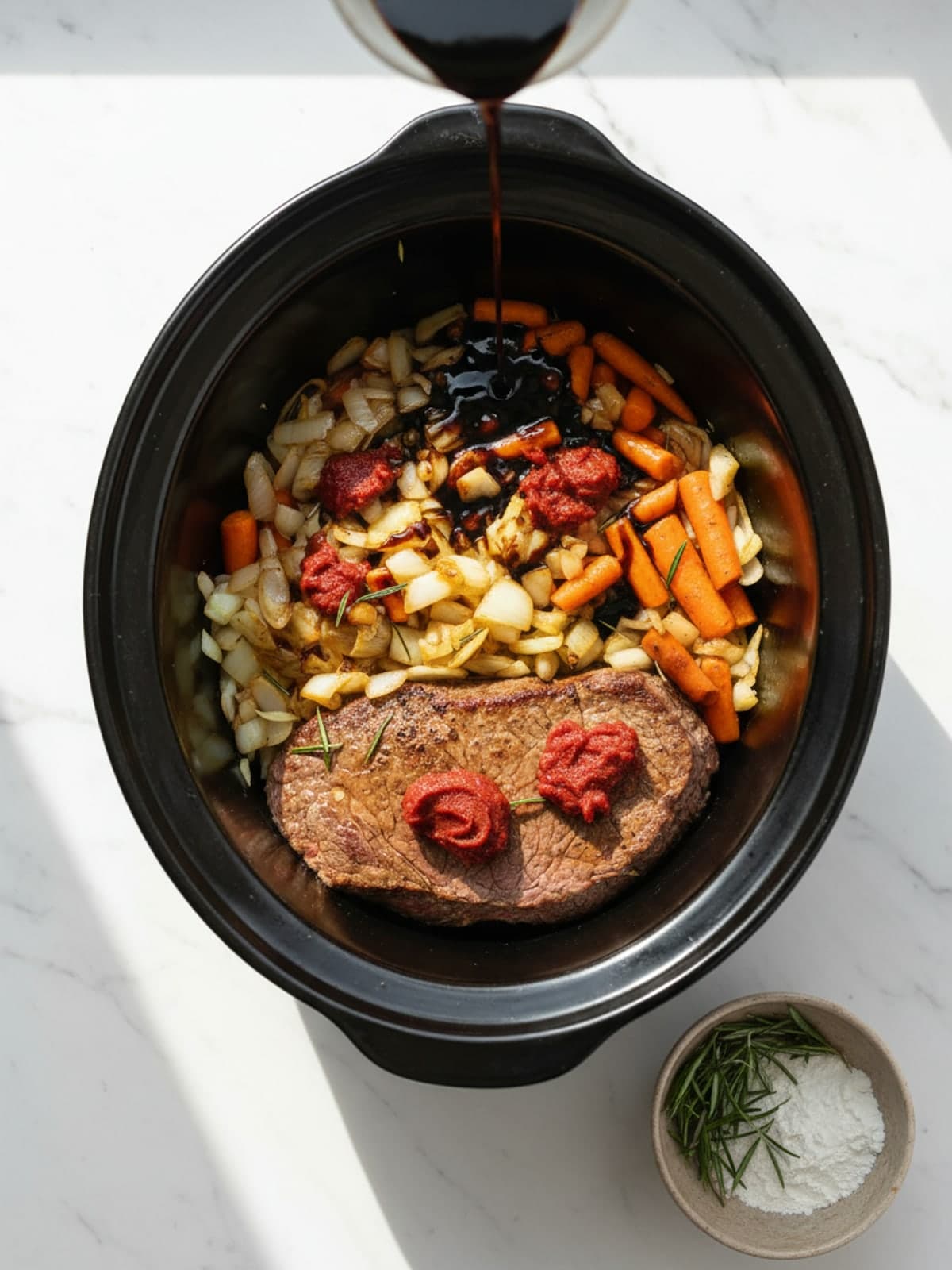
Add the sturdy vegetables, seasonings, measured liquid, and beef to the dark crockpot insert. Put quick-cooking ingredients aside for the finish. Keep the insert below three-quarters full and leave 6 inches of clear counter space around the appliance. Layer ingredients loosely rather than packing them down. The liquid should move around the food rather than being forced above an overfilled insert.
Cook to the visual checkpoint
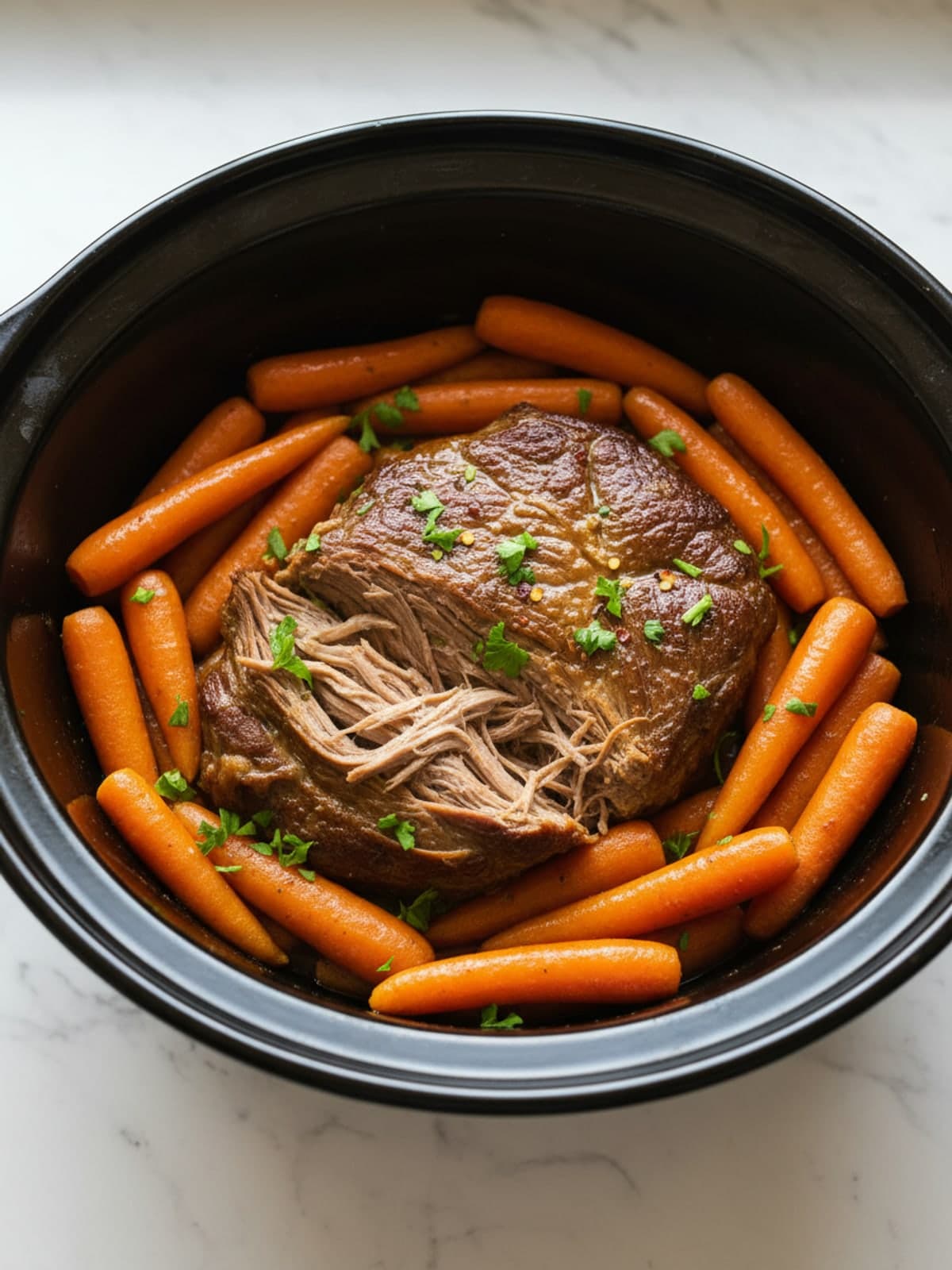
Cover and cook on low for 8 hours. Begin checking 30 minutes early. Do not lift the lid repeatedly. The decisive cue is beef that separates into broad shreds while carrots keep defined edges.
Finish without overworking
Add the cornstarch slurry at the point directed in the card. Fold or toss only until evenly distributed; aggressive stirring can break tender vegetables, pasta, seafood, or meat fibers. Check the final texture against beef that separates into broad shreds while carrots keep defined edges. Adjust thickness with a small measured splash of stock or water only when necessary.
Portion while the texture is clear
Move the food to plates or shallow bowls while the finish cue remains easy to see. Divide the beef and vegetables before spooning over remaining sauce. Inspect the thickest portion and the pieces from the appliance's hotter zone separately. If one is ready first, remove it rather than extending the complete batch.
The recipe
Balsamic Pot Roast
PrintChuck roast, onions, carrots, balsamic vinegar, tomato paste, and rosemary cook on a precise appliance schedule, with deliberate spacing and a visible texture cue that makes the finish straightforward to judge.
Course: Main Course · Cuisine: American
- Prep
- 20 min
- Cook
- 8 hr
- Total
- 8 hr 20 min
- Yield
- 8 servings
Nutrition Facts
Per serving. Recipe yield: 8 servings.
- Calories
- 433 kcal
- Protein
- 52.8 g
- Carbs
- 26.9 g
- Fat
- 11.7 g
- Fiber
- 4 g
- Sugar
- 6.3 g
- Sodium
- 571 mg
For 2 servings, scaled from the per-serving figures. Recipe yield: 8 servings.
- Calories
- 866 kcal
- Protein
- 105.6 g
- Carbs
- 53.8 g
- Fat
- 23.4 g
- Fiber
- 8 g
- Sugar
- 12.6 g
- Sodium
- 1142 mg
For 3 servings, scaled from the per-serving figures. Recipe yield: 8 servings.
- Calories
- 1299 kcal
- Protein
- 158.4 g
- Carbs
- 80.7 g
- Fat
- 35.1 g
- Fiber
- 12 g
- Sugar
- 18.9 g
- Sodium
- 1713 mg
Ingredients
Instructions
- Prepare. Cut and measure all ingredients. Reserve the cornstarch slurry for the final stage. Keep the main beef pieces close in thickness, patting away excess surface moisture when needed for browning.
- Arrange. Load the sturdy ingredients and measured liquid or oil into the dark crockpot insert. Keep the insert below three-quarters full and leave 6 inches of clear counter space around the appliance. Layer ingredients loosely rather than packing them down. Keep quick-cooking additions out until their directed interval.
- Cook. Cover and cook on low for 8 hours. Begin checking 30 minutes early. Do not lift the lid repeatedly. The decisive cue is beef that separates into broad shreds while carrots keep defined edges.
- Finish. Add the cornstarch slurry. Fold, toss, or thicken gently until the finish is even. Stop when the food shows beef that separates into broad shreds while carrots keep defined edges; adjust sauce consistency with a small measured liquid addition only if needed.
- Serve. Divide the main pieces first, then spoon vegetables and sauce around them. Check the thickest portion separately. Serve promptly, keeping any crisp toppings or citrus separate until the plate reaches the table.
Notes
- Use similar-thickness pieces so the finish window stays narrow and the early checkpoint remains meaningful.
- The stated cook allowance includes every pressure release, sauce adjustment, or final thickening interval.
- Refrigerate leftovers promptly in shallow covered containers, and add fresh herbs, citrus, or crisp finishing ingredients only after reheating.
- crockpot roast recipes
- crockpot
- balsamic
- pot
- roast
Tips
- Match thickness before matching weight. The thickest piece controls the useful timing window.
- Keep the stated spacing around food and the appliance. Crowding changes texture before it changes flavor.
- Measure finishing liquid in small additions. A loose sauce can tighten; an over-thinned one is harder to recover.
- Check at the early time, especially with a smaller or newer appliance that may cook more aggressively.
- Use the visual cue—beef that separates into broad shreds while carrots keep defined edges—before extending the schedule. Minutes are a guide, not the only evidence.
- Record which appliance zone finishes first. That observation makes the next batch easier to check.
Serving and storage
Serve balsamic pot roast with a crisp green salad, steamed rice, toasted bread, or a simply seasoned vegetable, choosing the side that fits the sauce. Divide the main pieces first so each serving receives a fair share. Keep crunchy toppings and citrus wedges separate until the table. The recipe yields 8 servings. A plain side can be prepared during the appliance interval without adding another complicated cooking task.
Questions people ask
How do I keep balsamic pot roast from cooking unevenly?
Use pieces of similar thickness, follow the stated spacing rule, and check the hottest zone first. Remove ready portions individually when practical. Extending the entire batch for one thick piece can dry or soften everything else.
Can I prepare balsamic pot roast ahead?
Measure and cut sturdy ingredients one day ahead, then refrigerate them separately. Keep seasonings, quick-cooking additions, and liquids apart until loading. This preserves the intended layering and prevents salt or acid from changing the main ingredient texture overnight.
Ratings and reviews
No ratings yet. If you have cooked this, yours would be the first.
Thank you. Your rating has been counted.
You have already rated this recipe, so this one was not counted.
Please choose between one and five stars.
Reviews are limited to 600 characters. Nothing was saved.
Names are limited to 40 characters. Nothing was saved.
That is a lot of ratings in one hour. Please try again later.
Before you go
Crockpot Balsamic Pot Roast earns its place by making the finish visible and the cleanup count explicit. The appliance carries the long interval; the final texture check handles normal variation between models and ingredient sizes. Save the method for a night when dinner needs a clear schedule and very little active attention.
Save this for later
Crockpot Balsamic Pot Roast
Tags
- crockpot-roast-recipes
- crockpot
- beef-recipe
- easy-dinner
Read next
Slow Cooker
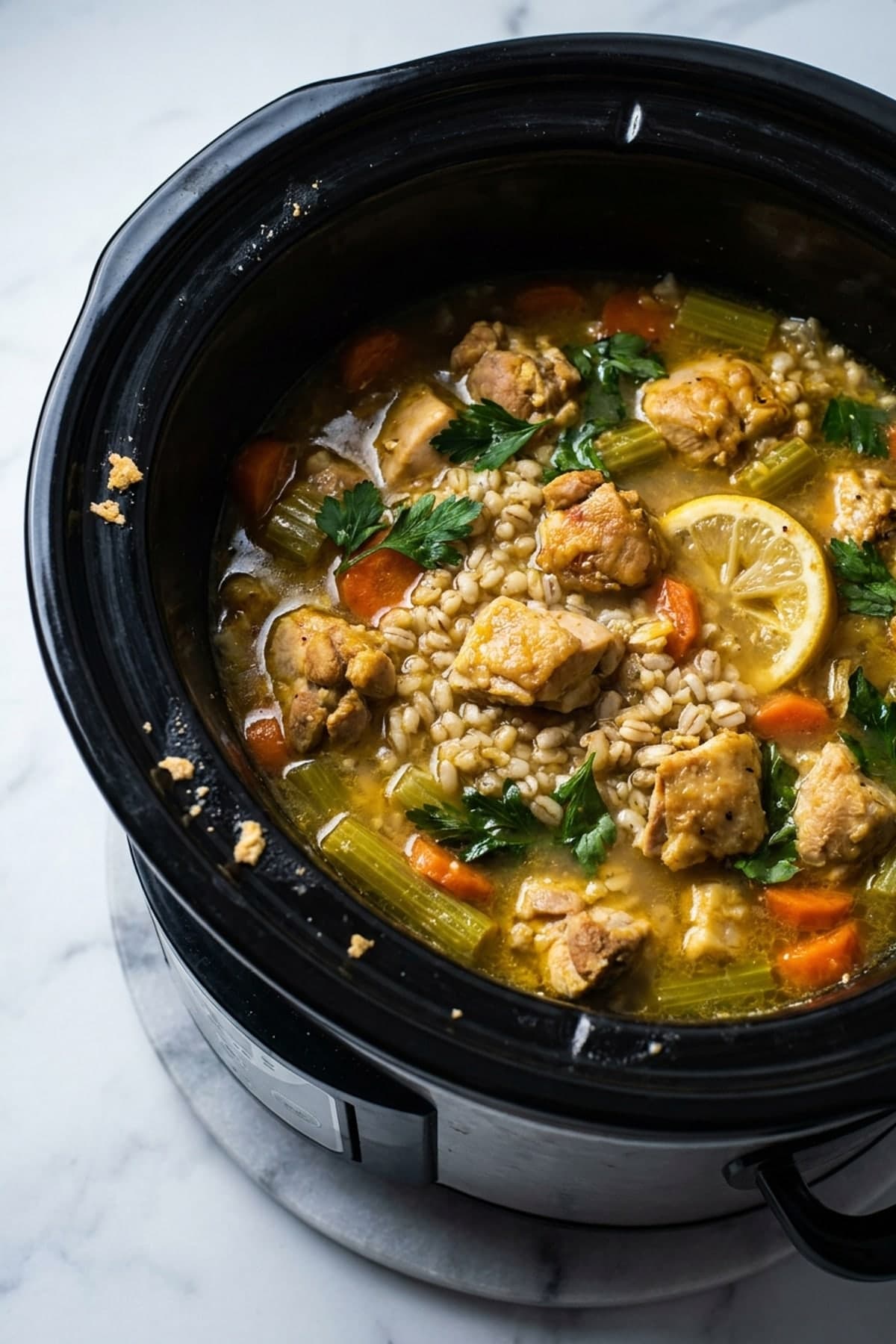
Crockpot Chicken Barley Soup with Lemon
6 hr 15 min total6 servings15 min prep6 hr cook
Make crockpot chicken barley soup with vegetables, herbs, and a bright lemon finish. The broth stays clear, and the barley turns tender without stirring.
Instant Pot
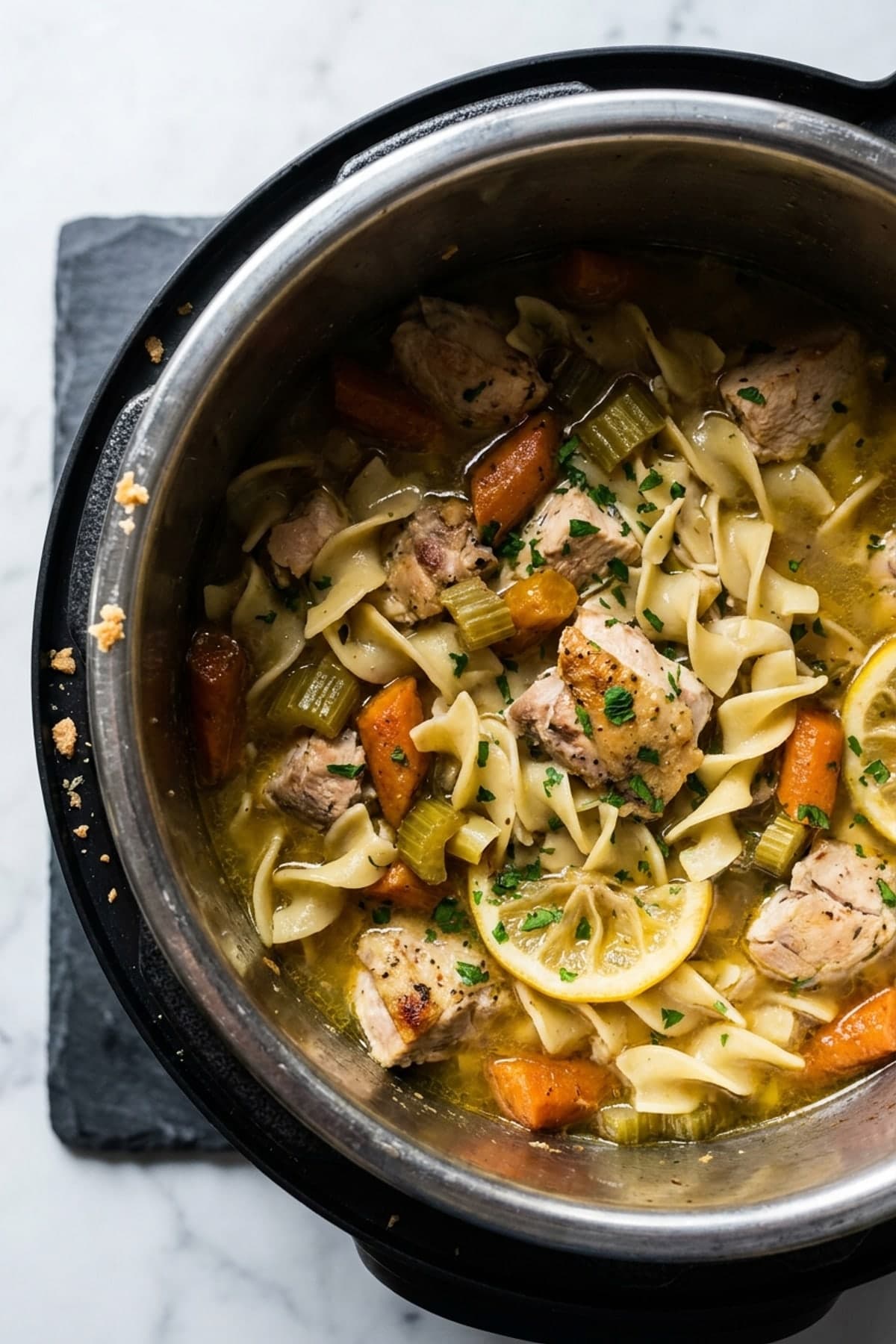
Instant Pot Chicken Noodle Soup with Clear Broth
43 min total6 servings18 min prep25 min cook
Instant Pot chicken noodle soup uses a short pressure cook and a separate noodle stage. The vegetables keep their shape, and the broth stays clear and bright.
One Pot
- Quick
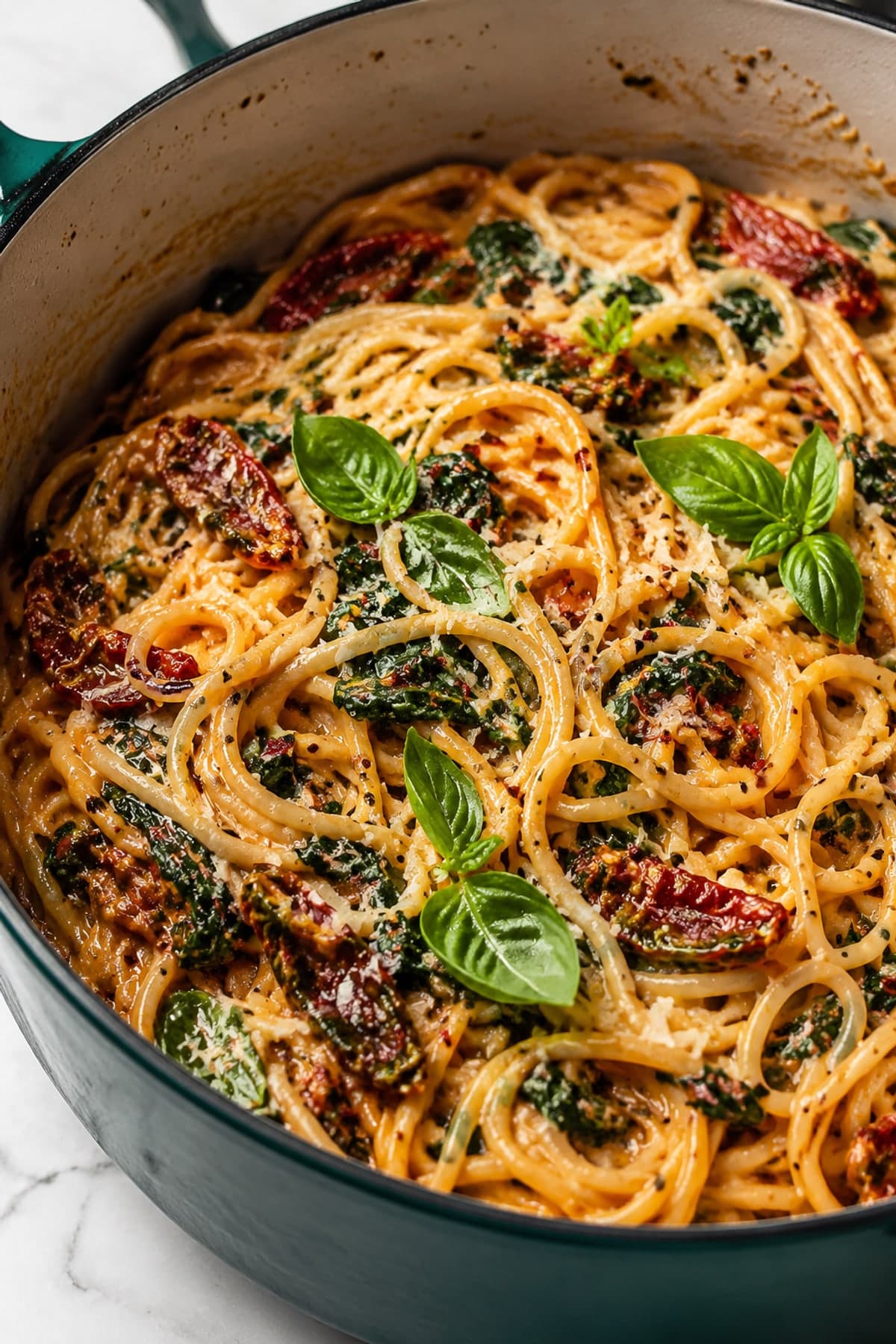
One Pot Tomato Spinach Pasta with Parmesan
30 min total4 servings12 min prep18 min cook
One pot pasta cooks in tomato broth, then finishes with spinach and Parmesan. A measured liquid ratio creates glossy sauce without draining or a second pan.
Slow Cooker
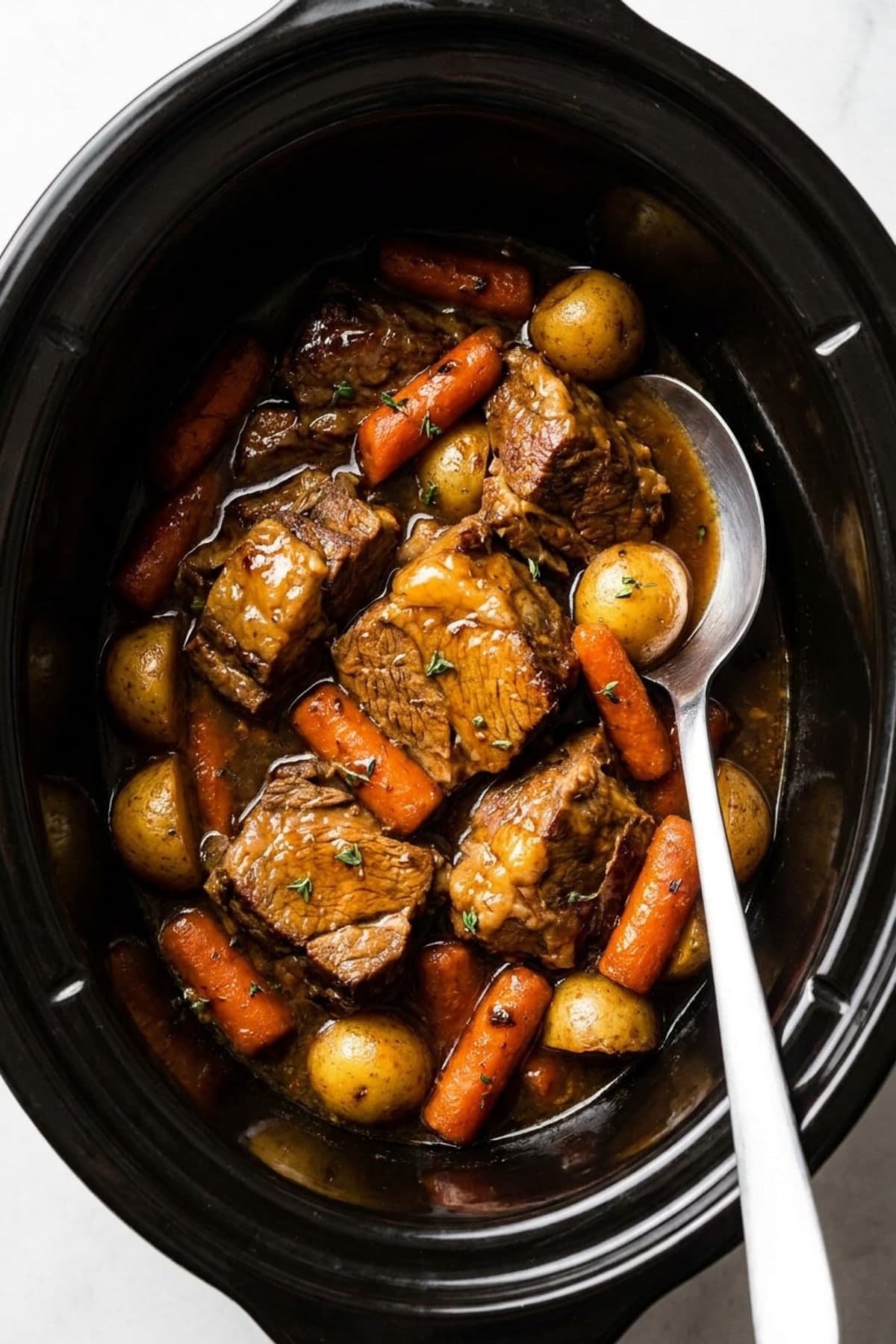
Pot Roast Crock Pot Recipes for Before-Work Mornings
8 hr 15 min total4 servings15 min prep8 hr cook
Start this slow cooker pot roast before work. Chuck roast, potatoes, carrots, and onion cook together with no browning required.
Slow Cooker
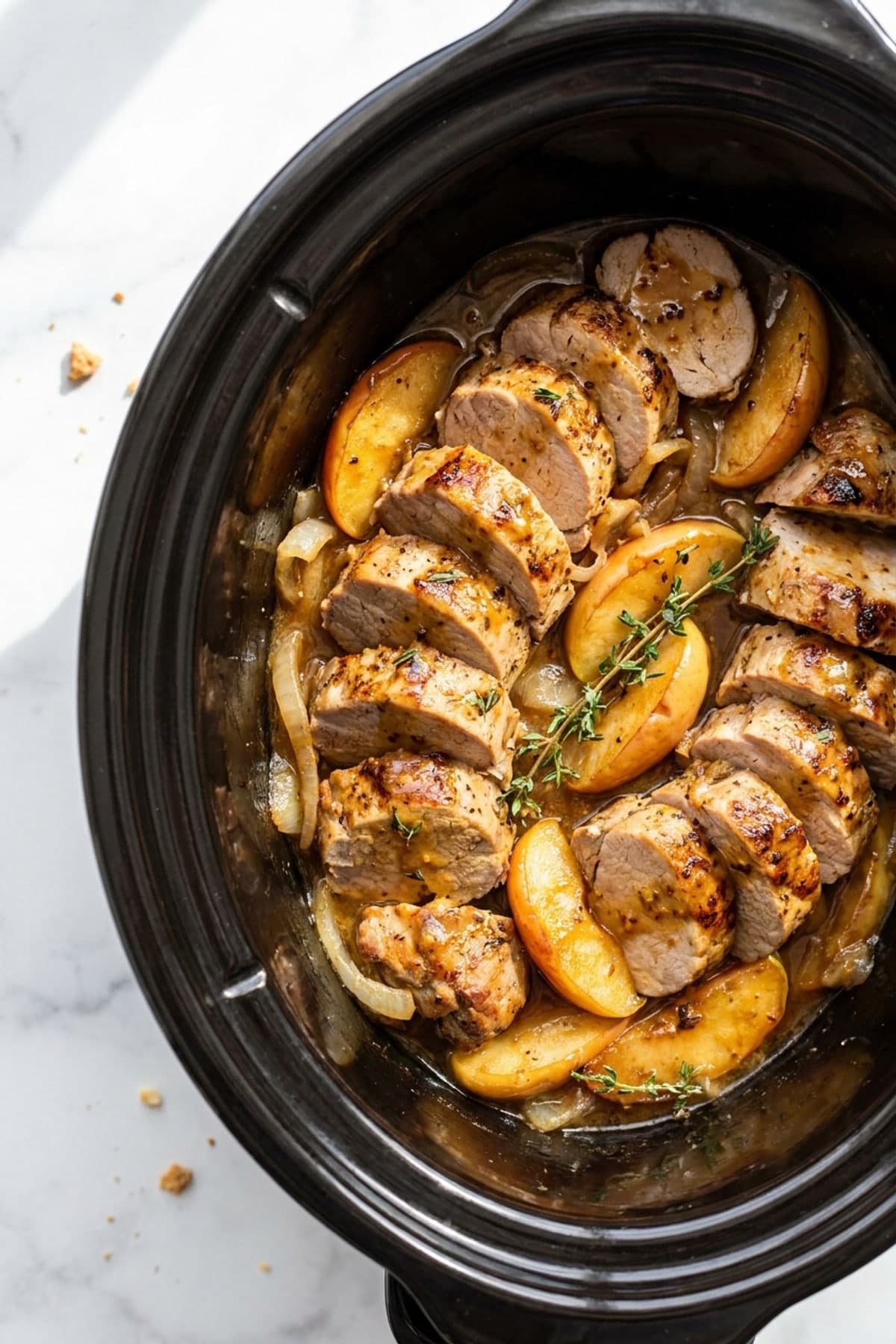
Crockpot Apple Dijon Pork Tenderloin
3 hr 15 min total6 servings15 min prep3 hr cook
Make apple Dijon pork tenderloin with exact appliance timing, practical spacing guidance, low cleanup, and a clear visual cue for the finished texture.
Slow Cooker
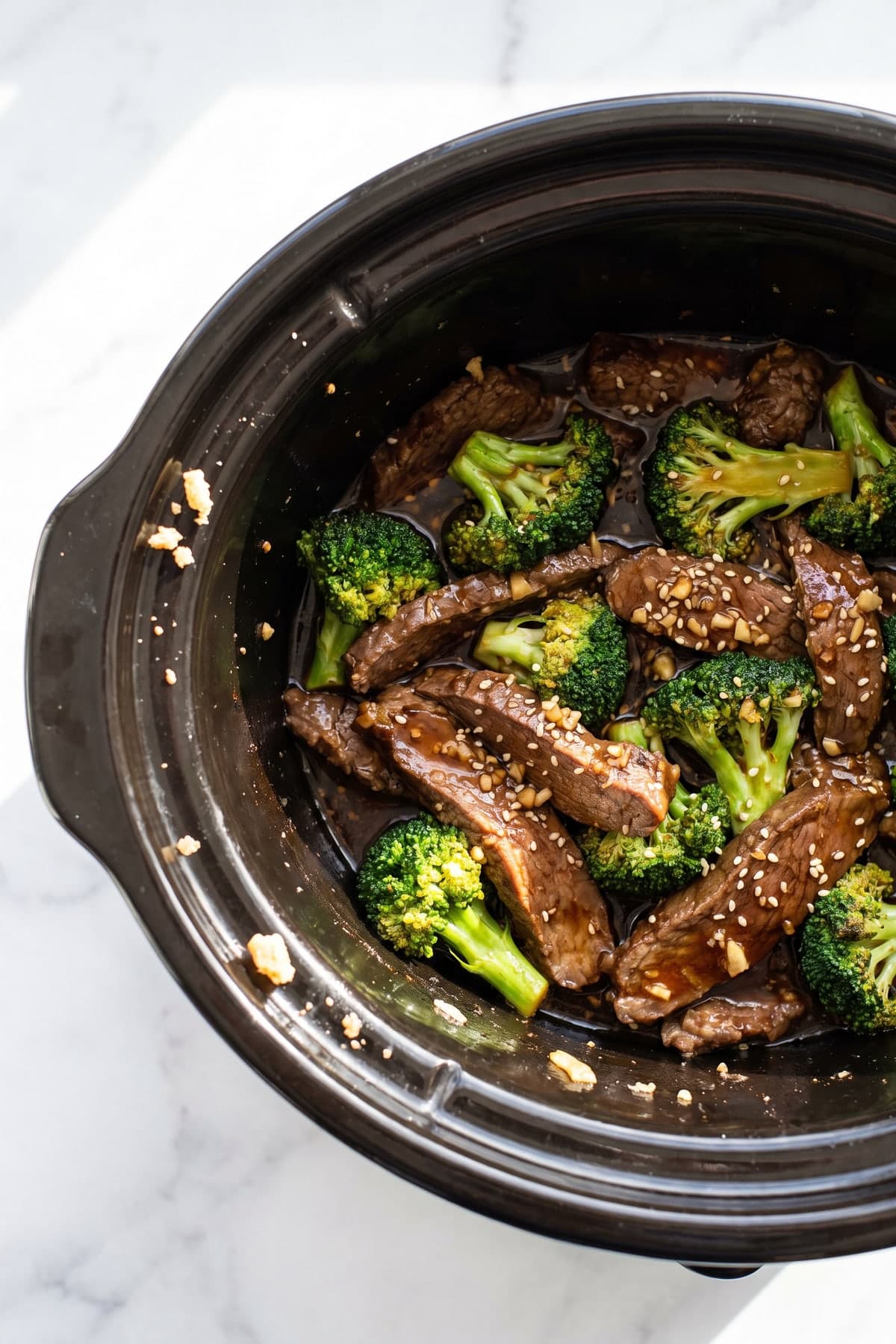
Crockpot Beef and Broccoli
3 hr 50 min total6 servings20 min prep3 hr 30 min cook
Make beef and broccoli with exact appliance timing, practical spacing guidance, low cleanup, and a clear visual cue for the finished texture.